Children Swimming is not merely a recreational pastime; it is an essential safety skill that provides them with a means of self-protection while building confidence and promoting mental and physical well-being throughout their lives.
No matter where your child lives or whether they swim regularly, teaching them to swim at an early age will lay a strong foundation for future swimming success.
Why is Children Swimming Important?
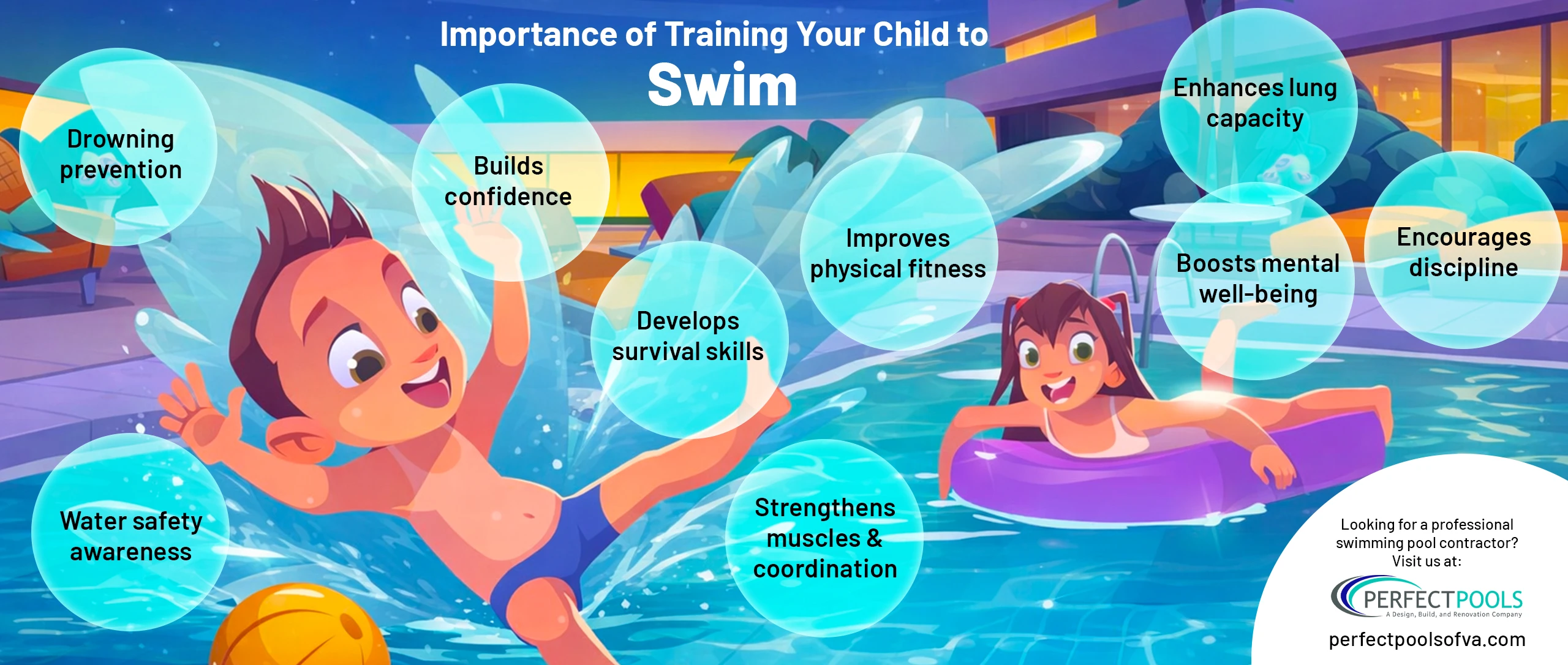
1. Water Safety and Accident Prevention
The greatest value in teaching kids to swim is the safety aspect. Drowning remains one of the top three causes of unintentional fatal injuries to children worldwide each year.
Swimming classes teach children:
-How to remain on the surface of the water
-Basic survival techniques when in the water
-What to do if they accidentally fall into the water
Being able to swim, even at a basic level, can greatly reduce the chance of an unintentional incident happening in the water.
2. Builds Confidence and Independence
Kids develop confidence and overcome fear as they learn to swim. When kids master new skills in the water, they gain an enormous sense of accomplishment that will follow them into many other aspects of life. Swimming develops kids’ independence. Kids learn to independently trust their own abilities while continually being aware of water safety.
3. Supports Physical Development
Swimming is a complete body workout. Swimming develops or increases the following:
-Muscle strength
-Flexibility
-Coordination
-Cardiovascular endurance.
Since swimming is a low-impact activity, it is easy on the joints of growing children, and it is appropriate for children of all fitness levels.
4. Improves Mental Well-Being
Children can experience anxiety relief and calmness while they spend some time in the water and swim. Swimming has the following benefits for children:
– Decreasing anxiety level
– Improving mood
– Increasing focus and discipline
Structured swimming classes or lessons develop patience, listening, and goal-setting skills.
5. Encourages Lifelong Healthy Habits
Children who have early swimming lessons will tend to:
– Maintain regular physical activity throughout their lives
– Participate in activities like water sports
– Enjoy exercising rather than consider it a “chore”.
Swimming can become an enjoyable and sustainable form of physical activity throughout one’s adult years that promotes health and well-being.
When Should Children Start Swimming?
Many experts suggest introducing children to water as early as 1–4 years old, focusing on comfort and safety rather than technique. Formal swimming lessons typically begin when children can follow instructions and feel comfortable in the water.
Final Thoughts
Teaching your child to swim is an investment in their safety, health, and confidence. It’s not just about learning strokes, it’s about equipping them with a skill that can protect their life, strengthen their body, and enrich their future. Starting early, staying consistent, and making swimming enjoyable can help children develop a lifelong respect for water and a love for staying active.
We use cookies to ensure that we give you the best experience on our website. If you continue to use this site we will assume that you are happy with it.


Recent Comments